- 0:01 h
- 33 m
- 1 m
- 1,882 m
- 1,883 m
- Start: Salwald
- Destination: Salwald
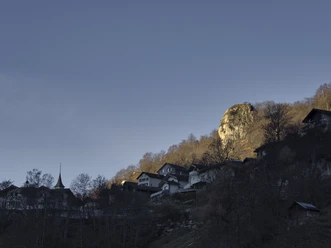
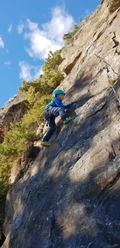
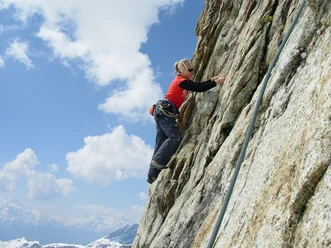
The small climbing area "Salwald" is located high above the hamlet of the same name. 4 steep routes about 15m high on grooves and holes are waiting to be discovered.
Sector Salwald
Skylla 7b
Zentaur 7c
Hercules 8a
Zerberus 7c+

Pavements
- Path (100%)
Best to visit
- suitableDepends on weather
Directions
From the parking area above Salwald, follow the footpath for about 30m and then turn right uphill towards the scree field. Bypass it on its left edge and follow the trail marks to the climbing rock.
Tour information
Refreshment stop
Equipment
In addition to the usual climbing equipment
- 50m single rope
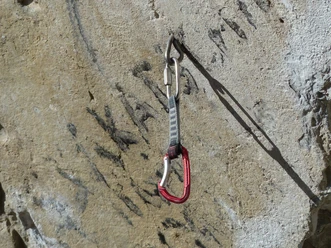
- 8 quickdraws
Directions & Parking facilities
- Getting there
Arrival by car
From Western Switzerland: A9 Lausanne - Vevey, and Northwest Switzerland: A12 Bern - Vevey: A9 - Sierre: Main road Sierre - Brig
From Northwest Switzerland: A6 Bern - Thun - Spiez: Main road Spiez - Kandersteg (car shuttle Lötschberg tunnel) - Goppenstein - Gampel - Brig
From Eastern and Central Switzerland: Andermatt - Realp (year-round car shuttle Furka; in summer via Furka Pass) - Oberwald - Brig
From Ticino (in summer): Airolo - Nufenen Pass - Ulrichen – Brig
Or via Centovalli – Domodossola – Simplon Pass – Brig
From Italy (Aosta, Mt. Blanc Tunnel): Aosta - Grand Saint Bernard Tunnel (in summer via the pass) - Martigny: Motorway A9 - Sierre: Main road Sierre – Brig
Or via Domodossola – Simplon Pass – Brig
Salwald
From Brig, you reach Mund via Naters. Here, follow the road further up to Salwald.
ParkingParking is available in Salwald (at the restaurant or further above on the roadside).
Public transportationThe climbing area is located above Salwald in Mund.
Mund is accessible by public transport from Brig or Naters.
Literature
Climbing guide Upper Valais
Goms / Aletsch-Brig / Simplon / Visp / Saastal / Mattertal / Raron-Siders
Author´s Tip / Recommendation of the author
Visit the Salwald restaurant for a fine saffron specialty or a cool refreshment.
Safety guidelines
Even if it looks tempting in movies: rock climbing in nature is not for beginners. Besides appropriate equipment and strength, a sound education and practice in belaying technique are needed. Because those who are properly secured rarely have serious accidents while rock climbing.
The 5 most important tips:
- Learn belaying technique and never let go of the brake rope while belaying
- Question the belaying behavior of climbing partners and address mistakes
- Perform partner checks – especially pay attention to knots
- Agree on commands and signals beforehand
- Wear a helmet, remove finger rings