- 4:15 h
- 13.28 km
- 779 m
- 781 m
- 1,968 m
- 2,579 m
- Difficulty: medium
- Start: Belalp, cable car mountain station (2095 m)
- Destination: Belalp
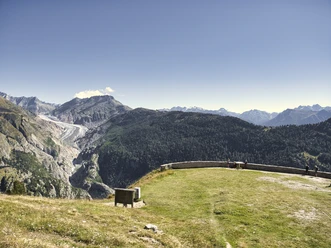
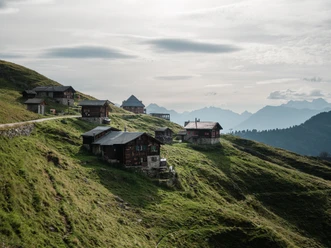
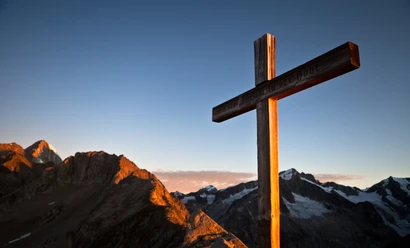
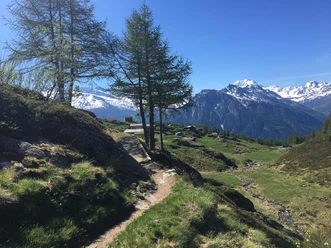
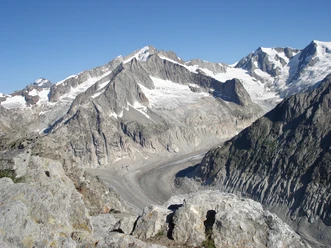
If you walk down from the Belalp mountain station towards Alpe Bäll, you can soon see the Foggenhorn. This summit ascent has much to offer. From the Chiematte, turn right and follow the flat hiking path to the Kelchbach. Then cross the small bridge and follow the zigzag hiking path uphill until after about 2.5 hours you reach the summit of Foggenhorn at 2569 m above sea level. From the summit, you can enjoy a beautiful panorama and take a short break to recharge for the further path. You start the descent to Alpe Nessel (2010 m above sea level) along the ridge. Then you follow the Nessel Suone back towards Chiematte.

Pavements
- Asphalt (1%)Trail (7%)Path (92%)
Best to visit
- suitableDepends on weather
Directions
If you walk down from the Belalp mountain station towards Alpe Bäll, you will see the Foggenhorn. From the Kühmatte, turn right and follow the flat hiking path to the Kelchbach. Then cross the small bridge and follow the hiking path towards Nesselalp. Shortly before reaching Nesselalp, turn right and follow the signs uphill towards Foggenhorn. Once you reach the summit, take a short break and enjoy the view. The path leads you along the ridge and then descends in a zigzag course, bringing you back to Alpe Bäll. From there, follow the path back to the Belalp cable car station.
Belalp - Foggenhorn - Nessel - Nessjieri - Belalp
Tour information
Mountain summit
Refreshment stop
Equipment
Sturdy footwear, weather-appropriate clothing, sun and rain protection, as well as sufficient provisions of food and drinks, should be carried in case no inns or shopping opportunities are available or open. Although the path is continuously well marked, for safety reasons you should always have a suitable hiking map with you. Bring poles or other aids.
Directions & Parking facilities
- Getting there
Arrival by car
From Western Switzerland: A9 Lausanne - Vevey, or Northwestern Switzerland: A12 Bern - Vevey: A9 - Sierre: Main road Sierre - Brig
From Northwestern Switzerland: A6 Bern - Thun - Spiez: Main road Spiez - Kandersteg (car shuttle Lötschberg tunnel) - Goppenstein - Gampel - Brig
From Eastern and Central Switzerland: Andermatt - Realp (year-round car shuttle Furka; in summer via Furka pass) - Oberwald - Brig
From Ticino (in summer): Airolo - Nufenen pass - Ulrichen – Brig
Or via Centovalli – Domodossola – Simplon pass – Brig
From Italy (Aosta, Mt. Blanc Tunnel): Aosta - Grand Saint Bernard tunnel (in summer via the pass) - Martigny: motorway A9 - Sierre: main road Sierre – Brig
Or via Domodossola – Simplon pass – Brig
Blatten bei Naters
From Brig, you reach Blatten bei Naters via Naters, then by cable car to the car-free Belalp.
ParkingPaid parking lots are available at Chienzlichrommu and in the parking garage in Blatten bei Naters.
Further information can be found at:
Public transportationBlatten bei Naters is accessible by public transport from Brig or Naters.
You can reach Belalp from Blatten by cable car.
Timetables and further information about travel can be found at: www.belalp.ch
Additional information
If you have questions, please contact:
Belalp Bahnen AG
Blatten - Belalp Tourismus AG
Author´s Tip / Recommendation of the author
Enjoy the view of the Bietschhorn and the Matterhorn as well as the view into the Gredetsch valley once you arrive at Foggenhorn.
For those free from fear of heights and sure-footed, there is a spectacular viewpoint at Nesselalp.
Safety guidelines
Despite the "unmissable" marking of the hiking trails, we recommend always carrying an appropriate hiking map for safety reasons, so that you can quickly find a safe area in case of a thunderstorm or emergency.
Especially in autumn, note that fallen leaves on the ground can hide unevenness, roots, stones, or holes in the path. After storms, trees can still fall or branches can break off. Particularly in adverse weather conditions, natural paths can have muddy and slippery sections. You must expect such trail impairments when undertaking a hike.
Not all rocks or precipices are secured with ropes or railings. Sure-footedness is partly required. If you find certain sections impassable, you should avoid them.
Map