Climbing area Rote Wand

- 0:01 h
- 2 m
- 2 m
- 729 m
- 731 m
- Start: Rote Wand
- Destination: Rote Wand
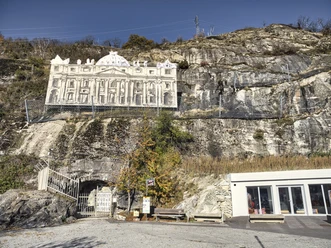
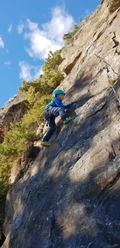
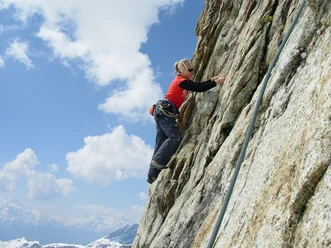
The climbing area has so far led a lonely existence. This is unjustified: because the striking, west-facing wall can be climbed all year round. In summer in the morning without sun and in winter in the afternoon with sun, the area offers steep wall climbing on beautiful gneiss.
Sektor Rote Wand
Bolzis P
Schlingenriss 6c
Greenpeace 6a+
Limit 6b+
Chief 6c
The devils left hand P

Good to know
Pavements
- Path (100%)
Best to visit
- suitableDepends on weather
Directions
From Brig station, go to Naters and in the direction of the BLS south ramp. Follow the hiking trail to the turnoff to Birgisch/Mund and from here you can already see the Rote Wand above the path.
Equipment
Besides the usual climbing equipment
- 70m single rope
- 16 quickdraws
Directions & Parking facilities
- Getting there
Arrival by car
From Western Switzerland: A9 Lausanne - Vevey, or Northwest Switzerland: A12 Bern - Vevey: A9 - Sierre: main road Sierre - Brig
From Northwestern Switzerland: A6 Bern - Thun - Spiez: main road Spiez - Kandersteg (car shuttle Lötschberg tunnel) - Goppenstein - Gampel - Brig
From Eastern and Central Switzerland: Andermatt - Realp (year-round car shuttle Furka; in summer via Furka pass) - Oberwald - Brig
From Ticino (in summer): Airolo - Nufenen pass - Ulrichen – Brig
Or via Centovalli – Domodossola – Simplon pass – Brig
From Italy (Aosta, Mt. Blanc Tunnel): Aosta - Grand Saint Bernard tunnel (in summer via the pass) - Martigny: motorway A9 - Sierre: main road Sierre – Brig
Or via Domodossola – Simplon pass – Brig
ParkingThere are various parking options in Brig and Naters.
Public transportationThe climbing area is about a 20-minute walk from Brig station.
Literature
Climbing guide Upper Valais
Goms / Aletsch-Brig / Simplon / Visp / Saastal / Mattertal / Raron-Siders
Safety guidelines
Even if it looks tempting in movies: rock climbing in nature is not for beginners. Besides suitable equipment and strength, it requires solid training and practice in belaying techniques. Because if you are properly secured, serious accidents hardly happen when rock climbing.
The 5 most important tips:
- Learn belaying techniques and never let go of the brake rope while belaying
- Question your rope partner’s securing behaviour and address mistakes
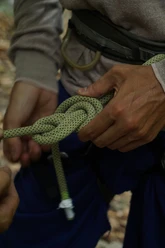
- Perform a partner check – especially pay attention to knots
- Agree on commands and signals beforehand
- Wear a helmet, remove finger rings